
AB 1033 ADU Separate Sale Rules for City and County of San Diego, CA
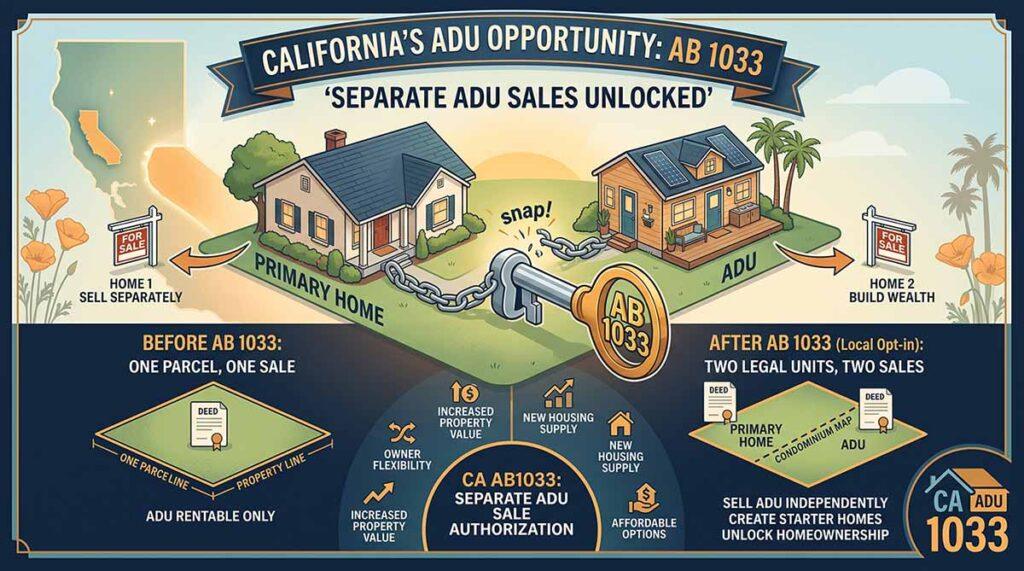
Both the City of San Diego and the County of San Diego have adopted ordinances to implement AB 1033, allowing Accessory Dwelling Units (ADUs) to be sold separately from the primary residence. However, each jurisdiction has specific restrictions and requirements.
City of San Diego
The City of San Diego’s AB 1033 ordinance went into effect on August 22, 2025. The key restrictions and rules include:
- Primary Residence Buyer Rule: When an ADU condominium is listed for sale, it must first be offered to buyers who plan to occupy it as their primary residence. The seller is required to market the property for at least 30 days on two public real estate websites with a disclosure stating this requirement.
- Lienholder Consent: Every lender who holds a lien on the property must provide written approval for the subdivision and subsequent sale.
- Tenant Relocation: If an ADU is currently occupied by a tenant, the homeowner may be required to provide the tenant with written notice and offer reasonable relocation assistance.
- Subdivision Mapping: The parcel must be mapped according to City standards, requiring an official subdivision map and monuments to be on file with the City Engineer.
- Utility Access: Each unit must have clearly defined and recorded access to essential utilities, such as water, sewer, gas, and electricity. This may require establishing separate metering, installing new service lines, or drafting formal shared access agreements.
County of San Diego (Unincorporated Areas)
The County of San Diego implemented its AB 1033 ordinance for unincorporated communities on April 4, 2026. The key restrictions and rules include:
- Condominium Conversion Process: The separate sale must be achieved by establishing the primary dwelling and the ADU as separate ownership interests through a formal condominium structure.
- Junior ADU (JADU) Prohibition: Junior ADUs are not eligible for separate sale under any circumstances and must remain legally attached to the primary residence.
- Unit Allowances: A condominium subdivision does not increase the number of dwelling units allowed on a lot. For example, a single-family property is still capped at one primary residence and up to two ADUs.
- Lienholder Consent: Written consent or a subordination agreement is required from any lienholder, mortgage holder, or Deed of Trust holder.
- Mapping Requirements: Applicants must submit a Parcel Map (for minor subdivisions creating four or fewer units) and a Condominium Plan.
- Utility Notification: Property owners must provide proof that they have notified all utility providers serving the property about the subdivision.
- HOA and CC&Rs: An HOA must be formed, and CC&Rs must be established to govern dues for maintaining common spaces (like shared roofs, driveways, and landscaping) and outline payment structures for shared utilities.